Kathmandu: Mount Everest Scenic Tour by Plane with Transfers
★ 4.6 · 268 reviews
- Cheapest flight here
- Two hours with hotel transfers included
- 268 reviews at 4.6 — the strongest on this page
- Free cancellation
What you see
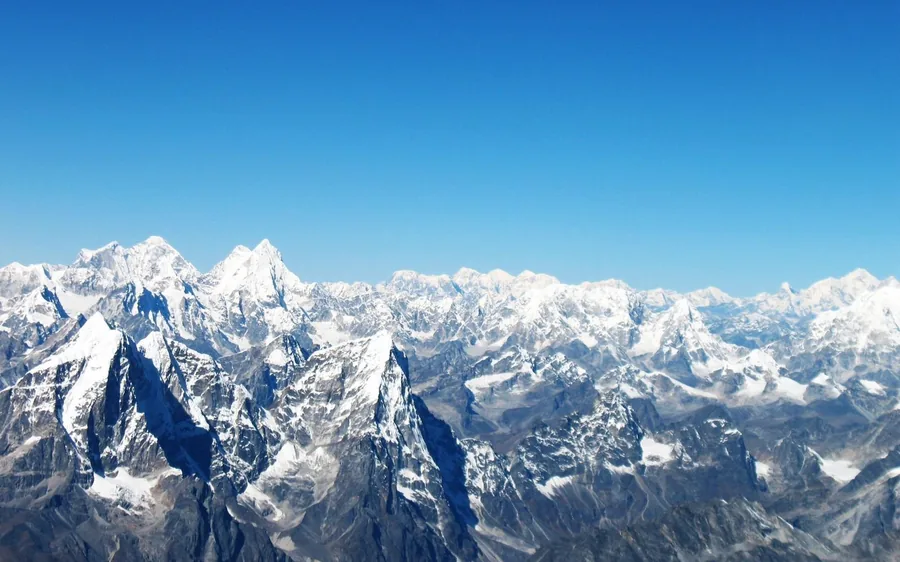
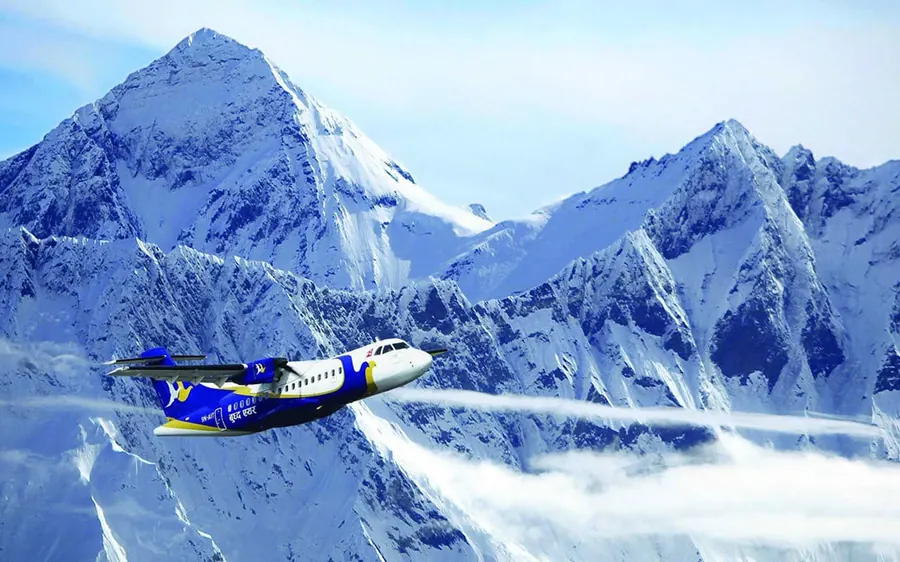
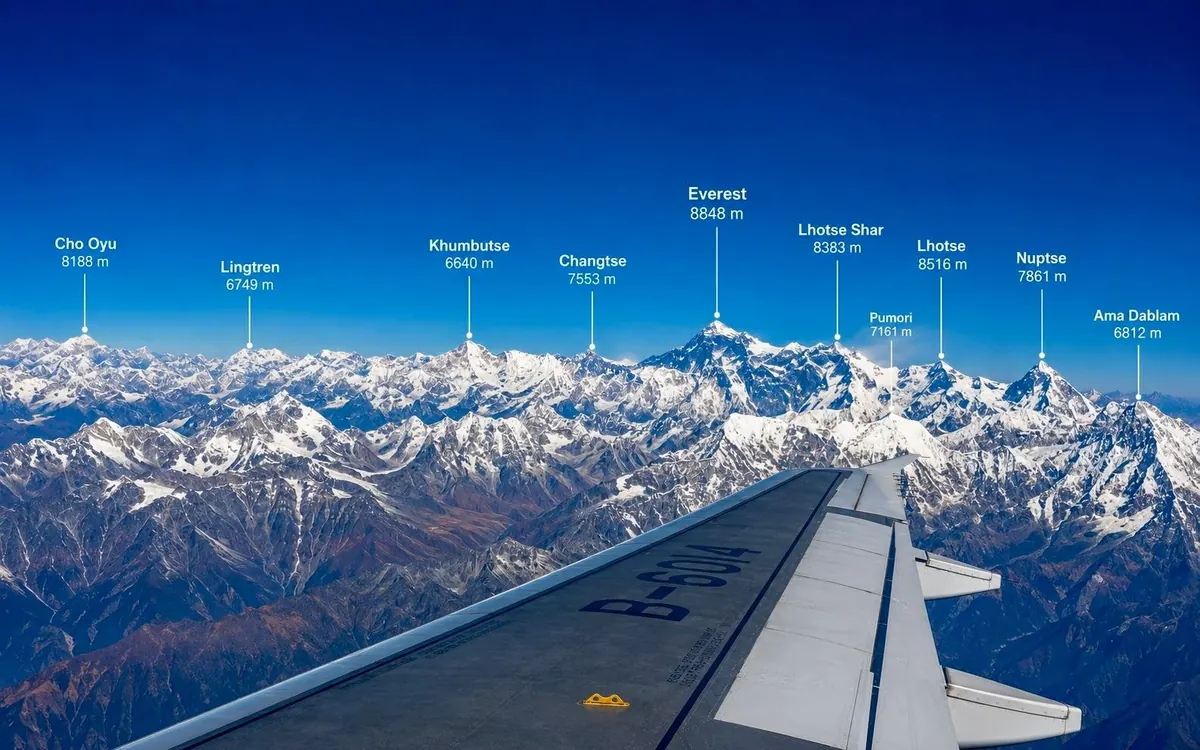
The route is the same on every one-hour listing, and it is worth knowing before you board, because it happens quickly. East out of the Kathmandu valley, then the range for about fifty minutes: Langtang, Gaurishankar, Cho Oyu at 8,188 metres, Nuptse, Lhotse, Everest itself at 8,848, and Makalu. Then the aircraft turns and flies back down the other side.

Quick answer
Seven named peaks in about fifty minutes, at roughly 25,000 feet, which is close to eye level with the summits. The crew hands round a mountain map and names each one as it passes. Everest comes about two-thirds of the way along, usually as a dark pyramid with a plume of snow off the summit. The aircraft turns there, so the return leg gives the other row the same view.
The plume
A banner of snow, torn off by the jet stream.
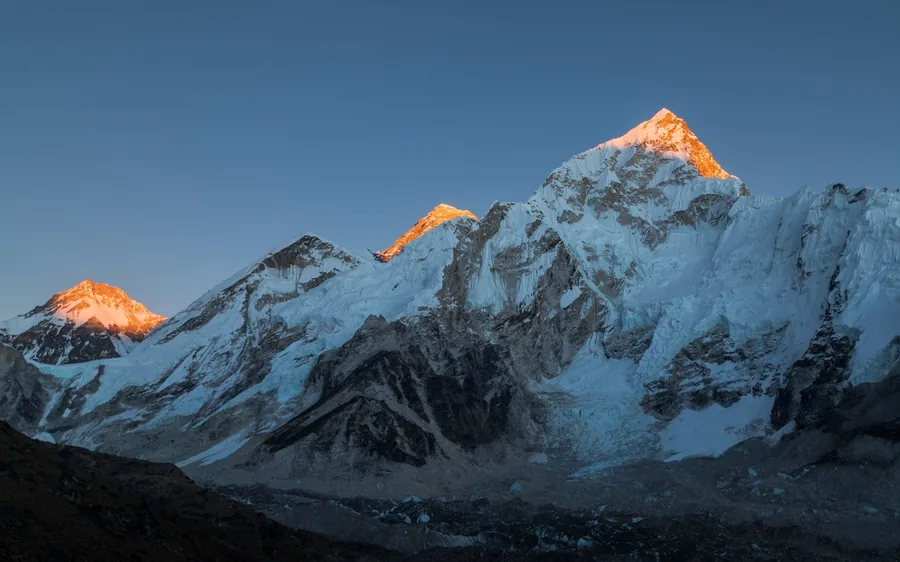
Everest is not the most striking mountain on the route. Ama Dablam is prettier, Lhotse is a more dramatic wall, and from some angles Everest looks like a dark shoulder behind Nuptse. What identifies it is the plume: a horizontal banner of snow torn off the summit ridge by the jet stream, which sits at about that height for much of the year.
If the plume is there, the crew will point at it and you will not need telling twice. It is in nearly every photograph of the mountain ever taken, and seeing it move is the moment people describe afterwards.
It is also a reminder of what you are looking at. That banner is wind at more than a hundred kilometres an hour at the height your aircraft is flying.
Why Everest comes last
The turn is why every seat works.
The aircraft flies east from Kathmandu with the range on the left. The peaks arrive in geographical order, which is why Everest is near the end rather than the start: it is further east than Cho Oyu and Gaurishankar.
At Everest the aircraft turns. That is not decoration — it is the whole reason both sides of the cabin get the same flight. On the way out the range is on the left; on the way back it is on the right. Nobody is cheated of the view by their seat, which is a genuinely thoughtful piece of route design.
It also means the second half of an Everest flight tour is not a repeat. You see the same peaks from the other side and in different light, and the crew usually stops talking, which is when people take their best photographs.
Book direct
The cheapest, our top pick, the no-frills hour and the most reviewed operator.
★ 4.6 · 268 reviews
★ 4.8 · 101 reviews
★ 4.8 · 74 reviews
★ 4.5 · 202 reviews
Five things you cannot see any other way
None of these is available from the ground in Nepal.
Kathmandu sits in a bowl at 1,400 metres and the mountain is 160 km away behind another range. It is not visible from anywhere in the valley.
From the ground you would need weeks and several valleys.
At 25,000 feet you are looking across at Everest rather than up at it. Even the trekkers at Kalapatthar are 3,000 metres below the summit.
Visible from the ground on a clear day from high in the Khumbu; visible from the aircraft in close-up.
On a clear morning the brown, flat country on the far side of the range is visible from the aircraft and from nowhere in Nepal.
In short
Seven peaks, a turn at Everest, and home.
Seven named peaks in about fifty minutes, at roughly eye level with the summits. Langtang, Gaurishankar, Cho Oyu, Nuptse, Lhotse, Everest and Makalu, in that order, with a map handed round and the crew naming each one.
Everest comes near the end, usually with a plume of snow off the summit, and the aircraft turns there so the return leg gives the other row the same view.
None of it is visible from Kathmandu, which is the whole reason every Everest flight tour on this page exists.
Common questions
Langtang, Gaurishankar, Cho Oyu, Nuptse, Lhotse, Everest and Makalu, in that order.
8,848 metres. The aircraft cruises at about 25,000 feet, which is close to eye level with the summits.
No. The city is in a valley at about 1,400 metres and the mountain is 160 km away behind another range.
The range is on the left going out and on the right coming back, and the aircraft turns at Everest so both rows get it.
Not from the one-hour flight — it is below the ridge line. The helicopter listings land there.
The jet stream tearing snow off the summit ridge. It is what makes Everest recognisable from the air.
Six things to look for, in order
Worth knowing the names before you board, because an Everest flight tour goes quickly.
In the first minutes, and then the foothills give way.
The first big range, about ten minutes in.
8,188 metres, the sixth highest mountain on earth, and the first eight-thousander of the flight.
Which stands in front of Everest and is the reason the mountain looks lower than it is.
Near the end of the outbound leg, and the point where the aircraft turns.
8,485 metres, the last of the big peaks on any Everest flight tour out of Kathmandu.
In short
Seven peaks, a turn at Everest, and home.
Seven named peaks in about fifty minutes at roughly eye level with the summits: Langtang, Gaurishankar, Cho Oyu, Nuptse, Lhotse, Everest and Makalu, in that order.
Everest comes near the end of the outbound leg, usually with a plume of snow off the summit, and the aircraft turns there so the other row gets the same view on the way back.
None of it is visible from Kathmandu, which is the whole reason every Everest flight tour on this page exists.
What you will not see, and why we say so
No Base Camp, no guarantees on haze, and not for long.
You will not see Base Camp from the plane. It sits on the glacier below the ridge line and the one-hour flights are too high and too far south. The helicopter listings land there; the mountain flights do not show it.
You will not always see the summit clean. In haze, or with cloud on the range, you may get the shape of the mountain without the detail. This is why October, November, March and April matter.
You will not see it for long. Everest is in view for a few minutes on the outbound leg and a few on the return. An Everest flight tour is an hour; the mountain itself is not an hour of it, and people who expect sixty minutes of one summit are the ones who come away faintly disappointed.
Go deeper
From $100 for an hour, and what the helicopter landings add.
The verdictTwelve listings, and the four worth your money.
Fly or trekOne hour against twelve days to the same mountain.
Plane or heliWhat each one can do that the other cannot.
LandingsBase Camp, Kalapatthar and what standing there is like.
BookingDeparture times, transfers and what sells out.